
News / Science
Galileo Project to Build Radar-Guided UAP Observatory on Carl Sagan's Former Land
Avi Loeb's Galileo Project has announced a fourth observatory in Ithaca, New York, combining passive radar, AI and a 0.7-metre telescope to image and analyse unidentified objects.
By Track the Unknown ·
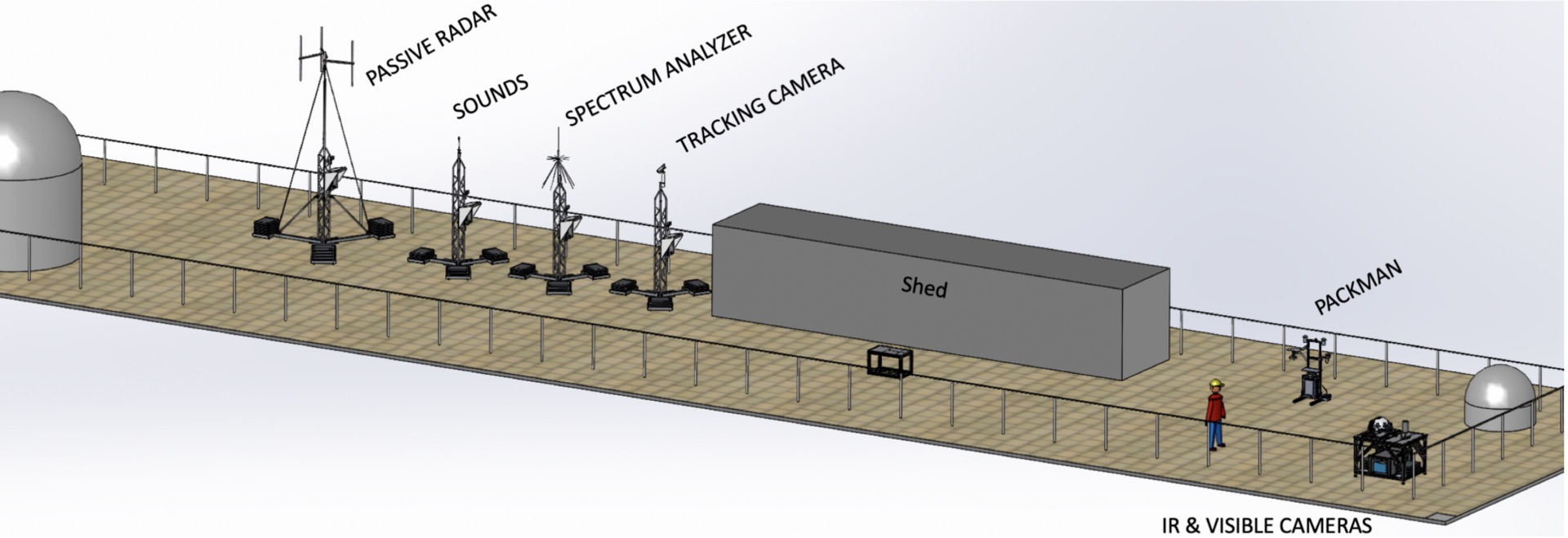

Harvard astrophysicist Avi Loeb has announced a new observatory for studying unidentified anomalous phenomena, to be built in Ithaca, New York, on a property once owned by astronomer Carl Sagan.
The plan
According to a press release dated 5 November 2026, the facility will be the Galileo Project's fourth observatory, after existing sites in Massachusetts, Pennsylvania and Nevada. It is funded by entrepreneur and philanthropist Adam Weitsman.
The design works in stages:
- A passive radar system continuously monitors the sky using reflected radio signals.
- AI-assisted software filters out known aircraft, satellites and other identifiable objects.
- A 0.7-metre PlaneWave CDK700 telescope is then steered towards anything left over, to capture high-resolution images and take spectra of the light the object emits or reflects.
It will be the first Galileo Project site to combine continuous radar with a large professional telescope. Development was due to start in November, with completion expected in about a year. IBTimes UK reports the project at around $1.5 million.
Why this approach
The release says the idea came from Loeb's reading of recent government UAP disclosures, including luminous orbs whose nature hasn't been established, and that most reports lack the measurements needed to say what was seen. Loeb has said some sightings could even turn out to be classified foreign technology — a possibility to test, not a conclusion.
Our view
Instrumented, independent data collection is exactly what UAP research needs, and spectroscopy in particular could distinguish a lit drone from a balloon or a satellite. The test will be whether the system publishes its full data, including the many objects it will inevitably identify as ordinary.
Sources
- Avi Loeb (Medium): A New Galileo Project Observatory for High-Resolution Imaging and Spectroscopy of UAP, incl. 5 Nov 2026 press release
- IBTimes UK: Avi Loeb wants $1.5 million for UFO telescope project (13 Nov 2026)
Tags: galileo project, avi loeb, ithaca, carl sagan, radar, telescope, adam weitsman, science